If water damage from a burst pipe, roof leak, or appliance failure is not handled fast, mold growth and structural problems can follow. Getting help right away reduces the damage and shortens the restoration timeline.
In this guide, we answer the question, “How long does water damage restoration take?” by defining what water damage restoration is, outlining the steps involved, and describing the factors that affect the timeline.
What Is Water Damage Restoration?
Water damage restoration is the process of cleaning, drying, repairing, and restoring a property after water intrusion or flooding. The goal is to remove moisture, prevent further damage, and return the property to a safe condition.
Common causes of water damage include:
- Burst pipes
- Flooding
- Roof leaks
- Appliance leaks
- Sewage backups
- Storm damage
Water can quickly spread behind walls, under flooring, and into insulation, which is why professional water damage repair is important after any major leak or flood.
The restoration process usually includes:
- Inspection and assessment
- Water removal
- Drying and dehumidification
- Cleaning and sanitizing
- Repairs and reconstruction
How Long Does Water Damage Restoration Take?
Most water damage restoration projects take between 2 and 5 weeks from start to finish. Smaller jobs may move faster, while severe flooding or structural repairs can extend the timeline.
Here’s the typical timeline:
- Water removal: 1-3 days
- Drying and cleaning: 3-7 days
- Repairs: 1-4 weeks
Water Removal
The first step is to remove standing water and stop the source of the damage. This process usually takes 1-3 days.
During this phase, restoration professionals:
- Inspect the property
- Assess the damage
- Identify safety concerns
- Stop the water source
- Remove standing water
Commercial pumps, wet vacuums, and extraction equipment help remove water quickly before it spreads further.
Damaged materials may also need to be removed, including carpet, drywall, insulation, or flooring. Minor water damage may only take a day to remove, while larger floods can take several days.
Drying and Cleaning
Next, the property must dry completely to prevent hidden moisture and mold growth. This process can take 3-7 days and may include:
- Drying and dehumidifying
- Cleaning affected surfaces
- Sanitizing contaminated areas
- Odor removal
- Mold prevention treatments
Restoration teams use air movers, dehumidifiers, and fans to begin the drying process. Professionals monitor moisture levels throughout to ensure walls, floors, and structural materials dry completely.
Gray water and black water damage often require more extensive cleaning due to the presence of bacteria and other contaminants.
Repairs and Restoration
After the property is fully dry, repairs and restoration can begin. This 1-4 week phase focuses on replacing damaged materials and restoring the property to a safe condition.
Repairs may include:
- Replacing drywall or flooring
- Repairing pipes or roofing
- Painting walls and ceilings
- Restoring damaged structural areas
Minor repairs may take only a few days, while larger reconstruction projects can take several weeks, depending on the extent of the damage.
Factors That Affect Water Damage Restoration Time
Every water damage restoration project is different. Some properties can dry and recover quickly, while others require extensive cleaning and repairs that extend the timeline.
Extent of the Water Damage
The amount of water damage can greatly affect how long restoration takes. Minor damage may only require basic drying and cleanup, while severe damage often involves demolition and major repairs.
Minor Water Damage | Severe Water Damage |
Small sink or tub overflow | Flooded basement |
Appliance leak contained to one room | Burst pipe affecting multiple rooms |
Minor roof leak caught early | Long-term roof leak with structural damage |
Wet carpet in a small area | Standing water throughout the property |
Small drywall stain | Mold growth behind walls and flooring |
In general, severe water damage takes longer because more materials need to dry, be cleaned, or be replaced.
Type of Water Involved
The type of water involved can affect both cleanup time and safety risks.
- Clean water: Comes from sources like broken pipes or sink overflows and carries little contamination.
- Gray water: Contains some bacteria or contaminants, often from appliances or washing machines.
- Black water: Highly contaminated water from sewage backups or flooding that requires extensive sanitizing.
Black water damage typically takes the longest to restore due to health and safety concerns.
Size of the Affected Area
Smaller areas typically dry and repair faster, while widespread damage often requires additional equipment, labor, and reconstruction.
For example, a flooded laundry room may dry out and be restored quickly, while a leaking roof or a burst pipe affecting multiple rooms can take much longer to fully repair.
Larger restoration projects may involve:
- More water extraction
- Additional drying equipment
- Removing damaged materials in multiple areas
- Longer drying times
- More extensive repairs and reconstruction
Drying Conditions
Drying conditions can cause moisture to remain trapped in walls, flooring, and insulation longer in certain environments, which may extend the restoration timeline.
Drying time depends on:
- Humidity levels
- Air circulation
- Weather conditions
High humidity and poor airflow can significantly slow the drying process.
Material Damage
Some materials absorb and hold moisture longer than others, affecting drying time and repairs.
Common materials affected by water damage include:
- Drywall
- Flooring
- Insulation
- Wood structures
If these materials become heavily saturated, they may need to be removed and replaced, which can increase restoration time.
Can Water Damage Restoration Be Done Faster?
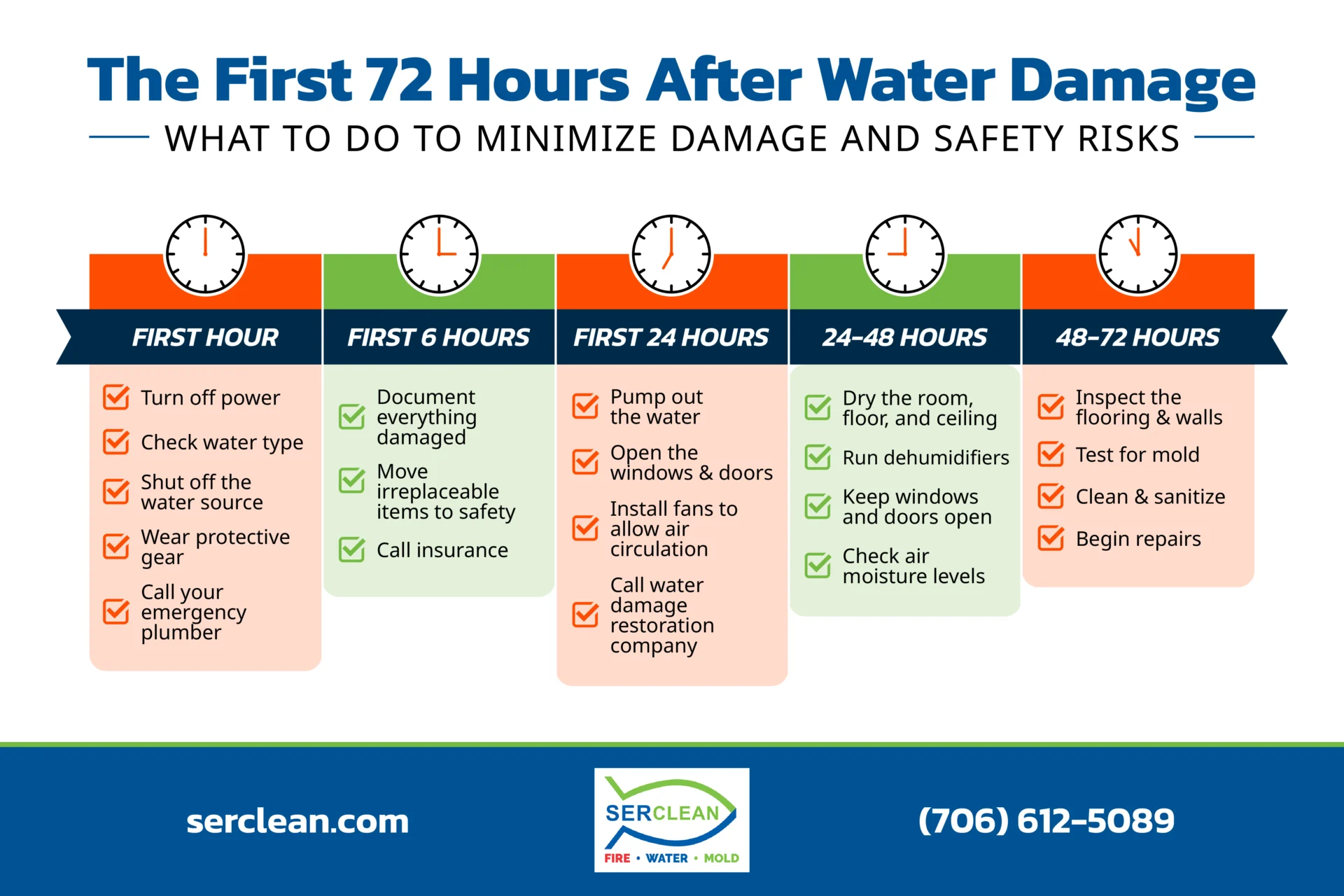
In many cases, yes. The faster restoration begins, the better the chances of reducing damage, preventing mold growth, and shortening the overall timeline.
Here are a few ways to help speed up the restoration process:
- Contact water damage restoration professionals right after discovering the water
- Remove valuables and personal items from affected areas
- Improve airflow by opening windows or using fans if it is safe to do so
- Address leaks or plumbing issues quickly to stop additional water intrusion
Professional restoration teams can use commercial drying equipment and moisture detection tools to dry the property more efficiently and prevent hidden moisture problems.
Water Damage FAQs
How long does it take for walls to dry after water damage?
Most walls take anywhere from 3 to 7 days to dry completely, depending on the extent of water exposure, humidity levels, and airflow.
Can water damage be fixed in one day?
Minor water damage may be cleaned and dried within a day, but full restoration usually takes several days or weeks, depending on the extent of the damage.
Does insurance cover water damage restoration?
Many homeowners’ insurance policies cover sudden and accidental water damage, such as burst pipes or appliance leaks. Damage caused by long-term neglect or flooding may require separate coverage.
How soon should restoration begin after flooding?
Restoration should begin as soon as possible. Water can start damaging materials and creating mold risks within 24 to 48 hours, making a quick response critical.
Serclean Is Here to Help
Dealing with water damage can feel overwhelming, especially when insurance claims and repairs happen at the same time. The right restoration company can help document the damage and the repairs, making the claim process just that little bit easier.
At Serclean, our team works directly with homeowners and insurance providers to make the restoration process smooth. From documenting damage to completing repairs, we help ensure your home is restored quickly and safely.
If your property has experienced water damage, our specialists are ready to respond. Get in touch with us today to schedule an inspection.