How to fix water damage depends on how long the water has been sitting and what materials it has affected. Acting quickly can limit damage and reduce the risk of mold, which can begin growing on wet materials within 24–48 hours.
Serclean’s restoration crews have firsthand experience helping homeowners and businesses recover from leaks, flooding, burst pipes, and other water emergencies. In this guide, we’ll cover how to repair water damage step by step, what to do with damaged materials, and when to call a professional.
Why Acting Fast Is the Most Important Part of Water Damage Repair
The sooner you identify the water source, contamination level, and affected materials, the better your chances of limiting damage and drying your property safely.
The 24–48 Hour Rule for Mold Prevention
The EPA recommends drying wet materials within 24–48 hours to help prevent mold growth. Materials like drywall, carpet, and subfloor that stay wet longer may be harder to save. You or a professional should inspect those materials for mold, deterioration, and the need for replacement.
Water Damage Categories — What’s Safe to Fix Yourself
The water source helps determine whether cleanup is safe to handle yourself or requires professional help.
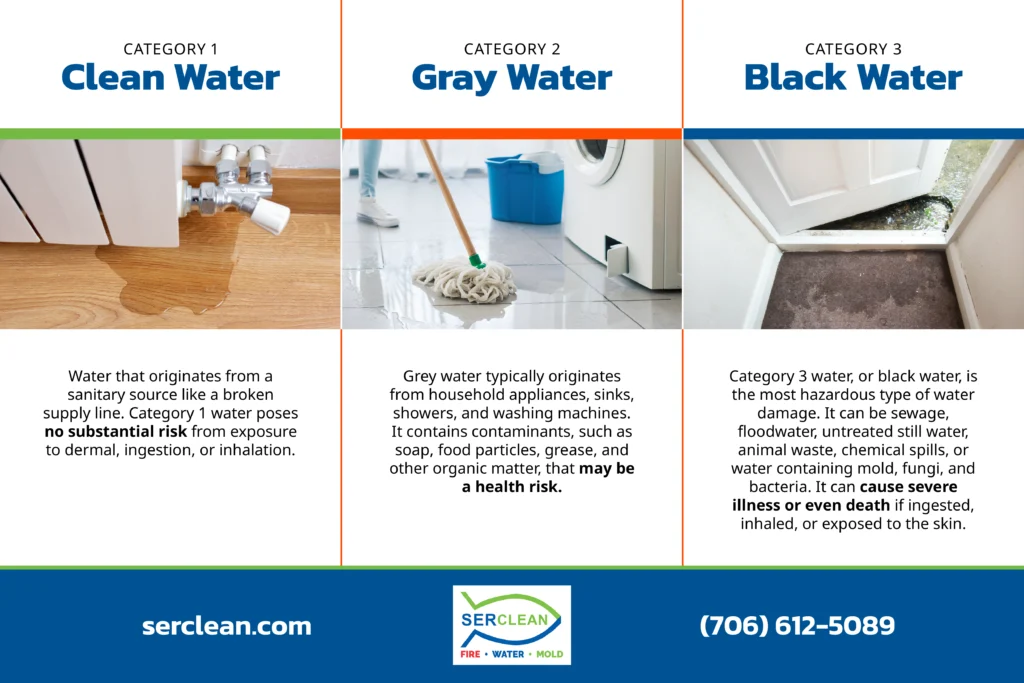
Water Category | Common Example | DIY Safety |
|---|---|---|
Category 1: Clean water | Burst supply pipe, rainwater | Small losses may be manageable DIY |
Category 2: Grey water | Washing machine or appliance overflow | Use caution and proper PPE |
Category 3: Black water | Sewage, floodwater, groundwater, bathroom flooding | Professional cleanup recommended |
Category 3 water can contain harmful contaminants. Don’t handle it like a normal household spill. If sewage or contaminated water enters your property, professional sewage damage cleanup can help safely remove the water, clean affected areas, and address contamination.
Step-by-Step: How to Fix Water Damage
Understanding how to fix water damage starts with following the right steps, from stopping the source to fully drying the area before repairs begin.
Step 1 — Stop the Source and Make It Safe
Shut off the water at the appliance valve or main shutoff, or temporarily cover a roof or storm opening if it is safe. If water is near electrical outlets, appliances, or wiring, stay away until you’ve safely shut off the power.
Step 2 — Remove Standing Water
Use a wet-dry vacuum for small amounts of clean water or appropriate extraction equipment for larger losses. Remove saturated rugs, furniture, carpet padding, and other wet items. Do not use fans until standing water is gone and you know the water is not contaminated.
Step 3 — Dry Structural Materials Thoroughly Before Any Repair
Use dehumidifiers and air movers to dry flooring, drywall, framing, and other affected materials, and verify dryness with a moisture meter before making repairs. For water that has spread beneath floors or inside walls, professional water damage restoration equipment can help locate and remove hidden moisture.
Step 4 — Repair Damaged Materials
Once the area is dry, replace drywall, flooring, insulation, or subfloor that is soft, swollen, delaminated, or otherwise damaged. Have weakened or rotted structural framing evaluated by a qualified professional before completing repairs.
How to Fix Water Damage by Surface Type
The right repair depends on the material, how wet it became, and whether it can be completely dried.
How to Fix Water Damage on Hardwood and Wood Floors
Understanding how to fix water damage on hardwood floor surfaces starts with drying quickly and removing baseboards to improve airflow. Minor cupping may improve after thorough drying, while split, buckled, severely warped, or delaminated flooring may need replacement.
How to Fix Laminate Flooring Water Damage
To fix laminate flooring water damage, remove swollen or damaged planks and completely dry the subfloor before installing replacements. A few click-lock planks may be replaceable, but laminate that has swollen or separated generally is not restorable.
How to Fix a Ceiling That Has Water Damage
To fix a ceiling that has water damage, repair the leak first and let the ceiling cavity dry. Replace soft or damaged drywall, then apply a stain-blocking primer before repainting.
Older textured or popcorn ceilings may contain asbestos, so have suspect materials tested before cutting, sanding, or scraping them.
How to Fix Water Damage on Walls (Drywall)
Drywall with minor staining may be salvageable once it’s completely dry, but you should replace soft, crumbling, swollen, or separated sections. Remove wet insulation as needed, repair the drywall, and use stain-blocking primer before repainting.
When to Stop DIY and Call a Water Damage Restoration Professional
Some water damage requires specialized equipment, safety precautions, or repairs that go beyond a typical DIY cleanup.
Signs the Damage Is Beyond DIY
Consider professional water damage restoration when:
Sewage or floodwater is involved: Category 3 water may contain harmful contaminants and requires careful cleanup.
You see or suspect mold: Disturbing mold without proper containment can spread spores to other areas.
Electrical, HVAC, or structural systems are affected: These systems may require qualified professionals to inspect and repair them.
Floors or framing feel soft or unstable: Spongy subfloors, rot, or weakened joists may indicate structural damage.
Moisture is widespread or hidden: Water inside walls, ceilings, or beneath floors can be difficult to locate and dry completely.
What a Professional Restoration Company Does Differently
Professional restoration teams use moisture meters, thermal imaging, commercial dehumidifiers, and air movers to locate and dry moisture that household equipment may miss. They can also document damage and moisture readings to support the insurance claims process.
Serclean provides 24/7 help for homes and businesses throughout our service area, from water extraction and drying through necessary restoration.
FAQs
How long does it take to fix water damage in a house?
Minor damage may take 3–5 days to dry before repairs begin. Larger losses involving walls, subfloors, or framing can take several weeks.
Can water-damaged drywall be dried out and saved?
Sometimes. Drywall may be salvageable if dried quickly, but soft, crumbling, swollen, or mold-damaged sections generally need replacement.
Will water-damaged hardwood floors go back to normal after drying?
Minor cupping may improve as hardwood dries. Severely warped, buckled, split, or delaminated flooring may need repair or replacement.
How do you fix wooden floor water damage?
Knowing how to fix wooden floor water damage starts with removing the water and thoroughly drying the floor and subfloor. Once dry, you can refinish damaged boards or replace them as needed.
Does homeowners insurance cover water damage repair?
Policies often cover sudden, accidental water damage, such as a burst pipe, but exclusions vary. Review your policy and document the damage before repairs.
Serclean Is Here to Help
Dealing with water damage can feel overwhelming, especially when insurance claims and repairs happen at the same time. The right restoration company can help document the damage and the repairs, making the claim process just that little bit easier.
At Serclean, our team works directly with homeowners and insurance providers to make the restoration process smooth. From documenting damage to completing repairs, we help ensure your home is restored quickly and safely.
If your property has experienced water damage, our specialists are ready to respond. Get in touch with us today to schedule an inspection.