A broken water supply line presents different water damage risks than a sewage backup, even when both affect the same amount of flooring. For this reason, professional property restoration technicians rely on four classes and three categories of water damage to guide their restoration decisions. This classification system helps them assess the source, contamination level, affected materials, and amount of absorbed moisture.
At Serclean, we help homeowners and businesses respond to water damage with professional extraction, drying, cleaning, and restoration services. This guide explains the differences between the categories and classes of water damage, what they mean for your home, and how to protect your property while you wait for help.
What Are the Categories of Water Damage? (IICRC Defined)
The ANSI/IICRC S500 Standard for Professional Water Damage Restoration provides the industry framework used to assess water losses by distinguishing water damage into three categories and four classes.
Why the Source of Water Matters: Professionals consider the original source, how long the water has been present, site conditions, and what the water contacted as it moved through the building. Water that begins as clean can become more contaminated over time or after passing through dirty materials.
How Categories Differ from Classes: A category describes the water’s contamination level, while a class describes how widely the moisture has spread and how much has been absorbed. For example, a sanitary supply-line leak may remain Category 1 but be classified as Class 4 if water penetrates deeply into hardwood, concrete, or another dense material.
The 3 Categories of Water Damage Explained
Understanding the three categories of water damage helps homeowners recognize possible health risks and avoid unsafe cleanup methods while they wait for professional help to arrive.
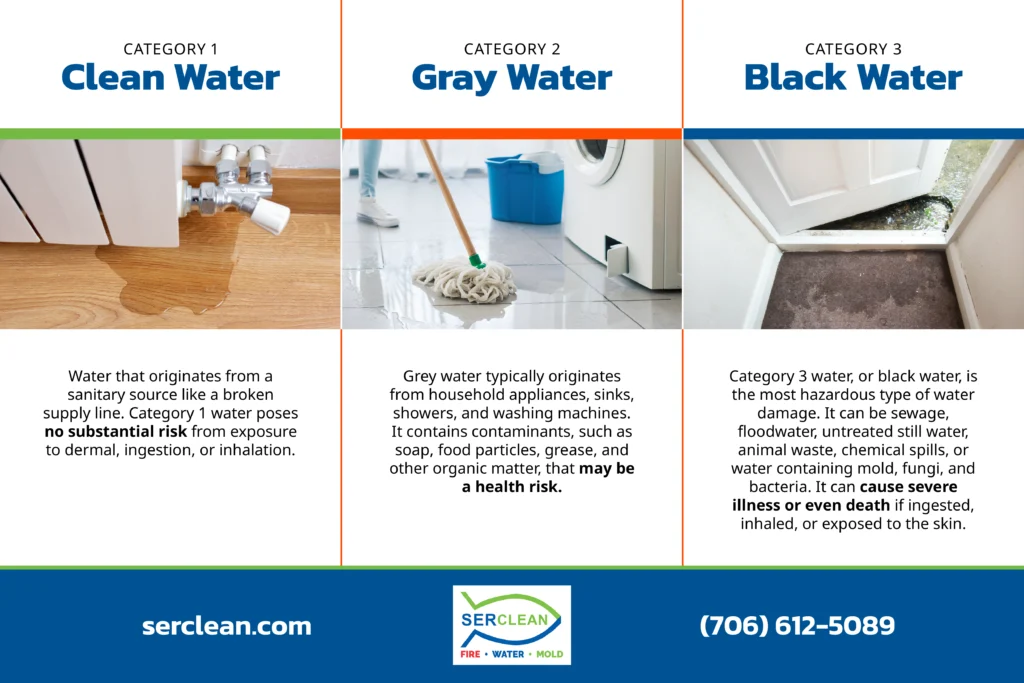
Category 1 — Clean Water
Common Causes and Health Risks: Category 1 water comes from a sanitary source and does not initially present a substantial contamination risk. Common causes include broken supply lines, overflowing sinks or tubs containing clean water, and leaking refrigerator or dishwasher supply lines. “Clean” describes the original water condition, not the damage it can cause when ignored.
What To Do: Turn off the water source when it is safe to do so, move valuables away from wet areas, and photograph the damage. Even clean water can soak behind walls or beneath floors, so professional moisture testing may be needed. The EPA recommends drying wet materials within 24–48 hours whenever possible to reduce the chance of mold growth.
Category 2 — Gray Water
Common Causes and Health Risks: Category 2 water contains enough biological, chemical, or physical contamination to cause discomfort or illness. Common examples include washing machine discharge, dishwasher overflows, sump pump failures, aquarium leaks, and some toilet overflows without fecal matter.
What To Do: Keep children and pets away, avoid touching the water, and do not use household fans before the contamination level has been assessed. Fans can spread contaminated droplets or particles into nearby areas. Some affected carpet, padding, drywall, and insulation may need to be removed. The decision depends on the material, exposure, contamination, and whether it can be cleaned and dried safely.
Category 3 — Black Water
Common Causes and Health Risks: Category 3 water is grossly contaminated and may contain disease-causing germs, sewage, chemicals, or other harmful substances. Sources include sewage backups, waste-line overflows, rising river water, storm flooding, and water that has moved through heavily contaminated areas.
What To Do: Do not enter the affected space or attempt DIY cleanup. Keep occupants and pets away, shut down nearby airflow when it is safe, and arrange professional sewage damage cleanup. Floodwater may contain human or animal waste, hazardous materials, sharp debris, E. coli, Salmonella, and other contaminants. Many absorbent materials, such as carpet pad, insulation, and affected drywall, commonly require removal, while structural materials must be evaluated individually.
The 4 Classes of Water Damage
While categories describe water contamination, the classes of water damage describe how much moisture has been absorbed and how difficult the structure will be to dry. Higher classes generally require more drying equipment, longer restoration times, and specialized techniques to remove trapped moisture. Restoration professionals use moisture meters and thermal imaging to complete a water damage assessment and determine the proper drying plan.
Class | What it means | Example |
|---|---|---|
Class 1 | Limited moisture affecting a small area with minimal absorption | A small supply-line leak on the bathroom floor |
Class 2 | Water has spread through an entire room and into porous materials like carpet and drywall | A washing machine overflow |
Class 3 | Extensive saturation of walls, ceilings, insulation, and flooring with the highest evaporation load | A burst pipe on an upper floor soaking multiple rooms |
Class 4 | Water has penetrated dense materials such as hardwood, concrete, brick, or plaster and requires specialty drying techniques | A flooded basement with saturated concrete and hardwood |
Why Water Damage Category and Class Matter for Homeowners
Scheduling a professional water damage assessment to classify and categorize the type of water helps guide a safer cleanup and a stronger insurance claim.
Health and Safety Decisions
Category 1 water usually presents the lowest health risk, while Categories 2 and 3 require increasing caution because of possible contaminants. Misidentifying contaminated water can expose water damage victims to bacteria and viruses.
What Gets Saved vs. What Must Be Discarded
The classes and categories of water damage distinguish what can likely be cleaned, what may need replacement, and the type of drying equipment needed. Moisture mapping also helps identify hidden damage before mold or structural problems develop.
How Category and Class Affect Your Insurance Claim
Professional water damage restoration companies document moisture readings, affected materials, photographs, and drying progress throughout the project. This documentation can help support your insurance claim by providing adjusters with a clear record of the damage.
Common Mistakes Homeowners Make After Water Damage
Mistakes That Make Category Worse
Waiting too long to begin drying. Wet materials become harder to restore the longer moisture remains. Mold can begin developing within 24 to 48 hours under the right conditions.
Running fans before contamination is identified. Air movement spreads contaminants when gray or black water is present.
Assuming clear water is always safe. Water that appears clean may become contaminated after moving through building materials or remaining stagnant
Mistakes That Damage the Insurance Claim
Throwing away damaged materials too soon. Take photos and contact your insurance company before disposing of affected items whenever possible.
Attempting major cleanup without professional guidance. Improper cleanup can leave hidden moisture or contamination behind, resulting in additional damage and more costly repairs later on.
Understand the Damage. Restore With Confidence.
Knowing the difference between the classes and categories of water damage can help you make safer decisions after a leak, flood, or sewage backup. Acting quickly and getting a professional assessment reduces the extent of the damage and supports your insurance claim.
If your home or business has experienced water damage, Serclean is available for emergency response 24/7. We use professional drying equipment and proven methods to reverse the effects of water damage, no matter the category.
Contact us today to schedule an inspection and begin the restoration process.